Dark spotting and musty rooms after a leak, Suwanee
Mold After Water Damage in Suwanee, GA
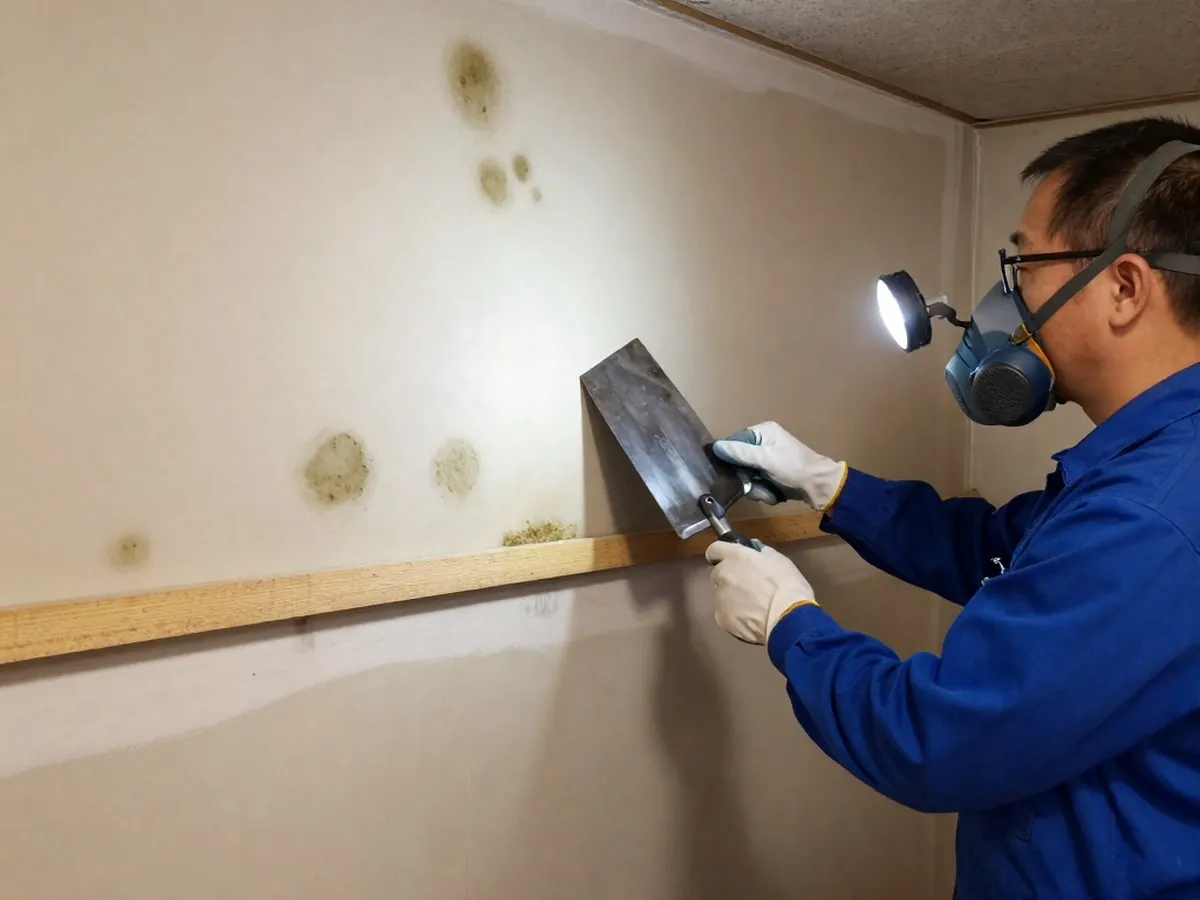
Mold after water damage in Suwanee, GA often shows as dark spotting on a baseboard, a musty smell in a closed room or paint that bubbles above an old leak.
Call (678) 572-1407 and describe where it is, how large it looks and what got wet before it appeared.
What you can see
- Dark or fuzzy spots on a baseboard, a wall or the back of a closet door
- A musty smell that is strongest in a closed room or a basement corner
- Paint that peels or bubbles above a spot that was wet in the past
- Carpet that smells even after it feels dry to the touch
- Drywall that feels soft, or cracks when pressed, near an old leak
Around Suwanee
University of Georgia Extension's mold and moisture checklist is written for Georgia homes, and it says to consider a dehumidifier when indoor humidity reads over 50 percent.
Every month in NOAA's rain normals for the Suwanee 1.5 W gauge tops 3.8 inches, with October the lowest at 3.82, so a damp wall has no dry season to rescue it.
On site, a visit goes like this
Call (678) 572-1407 and describe where the spotting is and what got wet; the contractor can arrange a visit.
The visit starts with the moisture, since the EPA's guidance puts finding and ending it ahead of any cleaning.
The affected area is measured and photographed, which shows whether it is owner-sized or contractor-sized.
Porous materials that stayed wet, carpet padding and drywall among them, are listed; UGA Extension says moldy padding is always discarded.
Anyone cleaning wears what the EPA lists: an N-95 respirator, gloves and goggles.
Drying and a plan to keep indoor humidity down come last, with a written summary for you.
When safety comes before cleanup
- Dark growth on a wall with wet outlets or wiring: stay away from it, and have an electrician look before anyone touches it.
- Wheezing, a tight chest or trouble breathing in a room with mold: leave the room, and call 911 if anyone cannot breathe.
- Cleaning products stirred together, bleach with an ammonia cleaner in particular: do not mix them, since the fumes are dangerous.
- A gas appliance or flue in the damp room: if you smell gas, head outdoors and let the gas company or 911 know from there.
What changes the size of a job
Area, materials and a source that may still be wet
Size comes first: a patch under 10 square feet is one kind of job and a wall of spotting is another. Then the material. Mold on hard, sealed surfaces cleans up differently from mold in carpet padding or drywall. A cause that is still active, such as a slow leak behind a wall, adds the work of finding it. No figure shows here; the contractor names one after looking.
Looks you can take from dry ground
Stay with checks you can make from dry ground, in daylight, away from anything electrical that has been wet. Wet wiring and soaked drywall are professional work.
- Measure the spotted area with a tape. The EPA's brief guide says an area under about 10 square feet can often be handled by the owner, and larger areas call for help.
- Check humidity with a small hygrometer from a hardware store. University of Georgia Extension says a reading over 50 percent suggests running a dehumidifier.
- Look behind furniture pushed against an outside wall, under sinks and inside closets for dark spotting.
- Photograph the spots with a ruler in frame. The EPA says sampling is usually unnecessary when mold is visible.
Moves that make it worse
Habits that let spotting come back
Painting or caulking over dark spots while the wall is still damp. Running the heating and air system after a flood, which the CDC says not to do with a flooded unit. Scrubbing with strong cleaners in a closed room and no mask. Drying the surface and leaving the source dripping behind it.
Georgia seasons and this job
The clock in the guides does not change by month
The EPA's brief guide gives water-damaged areas and items a drying deadline of 24 to 48 hours, and University of Georgia Extension says growth can start within 24 hours after a flood. Neither page changes that window for the time of year, so a January leak and a July leak run on the same clock.
Have this at hand
Details that help the call go smoothly
- Where the spotting is, and about how large the area looks
- What got wet before it appeared, and roughly when
- Whether the leak has been stopped
- Whether the room is closed up, and how humid it feels
- Photos with a ruler or a coin in frame
Have the street address, the room it started in and what you can see ready, then call (678) 572-1407. If you rent, contact the landlord first. Calls cover Suwanee, Sugar Hill and Johns Creek.
Before you hire anyone
When cleanup reaches the walls
Tearing out and replacing drywall can be more than a minor repair, and each city draws that line its own way. The hiring checklist lists the building offices for Suwanee, Sugar Hill and Johns Creek and what each page says.
Where this comes from
- U.S. EPA, A brief guide to mold, moisture and your home
- U.S. EPA, Mold cleanup in your home
- U.S. EPA, Mold basics
- University of Georgia Extension, Removing mold in your home (C1047-2)
- University of Georgia Extension, Mold and moisture home inspection checklist (C1083)
- U.S. EPA, What are the main ways to control moisture in your home
- U.S. EPA, Flood cleanup: protect indoor air and your health
- CDC, Floodwater after a disaster or emergency
Checked 1 Nov 2026