Stains, bulges and drips overhead near Suwanee
Ceiling and Wall Leaks in Suwanee, GA
Ceiling and wall leaks in Suwanee, GA tend to start as a brown circle, a drooping corner or a drip that comes and goes with the rain.
Call (678) 572-1407 and tell the contractor which room, which floor and when it last rained.
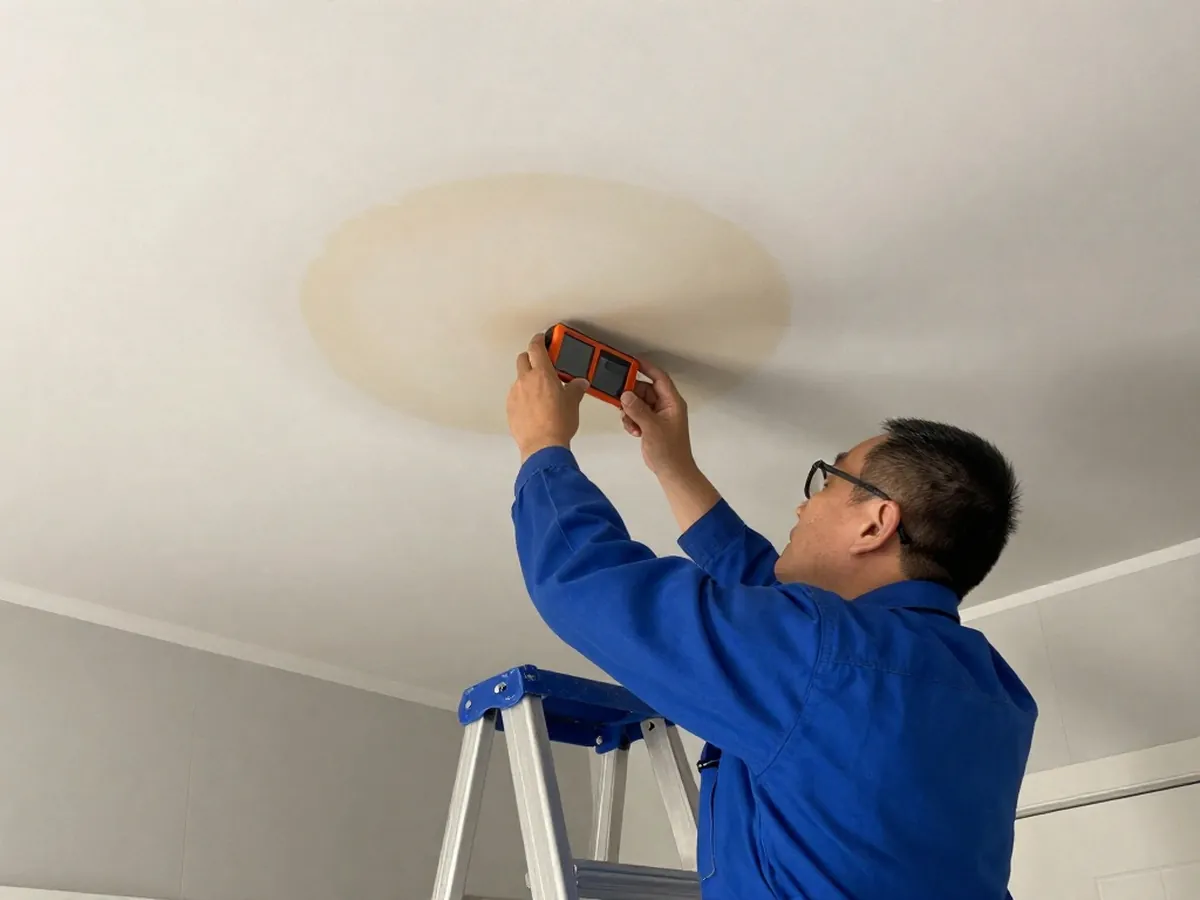
What you can see
- A brown or tan circle on a ceiling that grows a little each time you look
- A corner that sags, or a seam where the paint has bubbled
- Drips from a light fixture or a vent cover
- A wall that feels cool and damp under your hand near a bathroom or the roofline
- A musty smell on an upper floor after a hard rain, even when nothing is dripping
Around Suwanee
An inch of rain in a day shows up every month: NOAA's normals for Cumming 2 N list between 1.3 and 1.7 days a month with at least 1.00 inch, in every month of the year. A roof or flashing that leaks only in hard rain has no off-season.
Gwinnett County's leak page names the usual suspects inside a house: dripping faucets and showerheads, pipes under a sink or in a basement, and the area around the water heater.
On site, a visit goes like this
Call (678) 572-1407 and name the room, the floor and the last time it rained; the contractor can arrange a visit.
Moisture readings on the ceiling, the wall below it and the floor show how far the damp reaches, and the attic gets a look where there is access.
The water is traced back toward its source, whether a pipe, a roof, a vent or a window, and the contractor names which trade handles that part.
Wet drywall is checked by touch and by meter, and stained or sagging sections come out only after the source has stopped.
Insulation over a wet ceiling gets a look as well. University of Georgia Extension's mold guide says wet wall insulation is removed.
The contractor lays out what dries in place, what gets replaced and what to photograph for the insurer.
When safety comes before cleanup
- A ceiling that sags, bulges or drips from a bulge: nobody stands or sleeps under it, and any sign it is letting go means 911.
- A light fixture or fan that is wet or dripping: leave the switch alone, keep out of that room, and phone 911 at the smell of burning or the sight of sparks.
- A wall outlet that is damp or has water behind its cover: stay away, keep children back and have an electrician check it.
- A gas smell near an attic furnace or a flue close to the leak: get out of the house first, and let the gas company or 911 hear about it from the lawn.
What changes the size of a job
How far a stain travels before the job grows
A circle the size of a plate and a bulge the size of a bedroom are different jobs. Size of the wet area, whether the water has gone into the wall below, the number of floors it crossed and whether insulation above took it up all shape the work. A leak that stopped last week is simpler than one that has returned with every storm. No price shows here; one comes after the contractor sees the ceiling.
Looks you can take from dry ground
Stay with checks you can make from dry ground, in daylight, away from anything electrical that has been wet. Wet wiring and soaked drywall are professional work.
- Outline the stain in pencil and write the date inside the line. After the next rain, or the next shower upstairs, see whether it moved.
- Think about the rooms and fixtures above the stain: a bathroom, a laundry room, a water heater, an exterior wall. Water on a ceiling often arrives sideways.
- From the ground, look at the roof edge above the stain for missing shingles, and at the gutter for overflow. The ladder stays in the garage.
- Lay the back of a dry hand on the stained spot, then photograph it with a pencil in frame for scale.
Moves that make it worse
Habits to skip when a ceiling is wet
Standing under a bulging section to look at it, photograph it or poke at it; the Red Cross describes a sagging ceiling as both heavy and dangerous. Painting over the stain before the cause is found, since a sealed stain hides the evidence. Leaving a fan or a light running under a wet fixture. Carrying on with the ladder when the roof is the suspect.
Georgia seasons and this job
Rain that arrives from January through March
On the Suwanee 1.5 W gauge, NOAA's 1991-2020 normals run from 4.7 to 5.1 inches a month between January and March, with June close behind at 4.99. Winter and spring storms are long, soaking rains, and they find the slow leaks that a summer thunderstorm would pass over.
Have this at hand
What to say when someone picks up
- Which room, and which floor of the house
- What you see: a circle, a bulge, a drip, a sagging corner
- What sits above it: a bathroom, a roof, an attic
- Whether it changes with rain or with a shower
- Photos, and the date you first saw it
Have the street address, the room it started in and what you can see ready, then call (678) 572-1407. If you rent, contact the landlord first. Calls cover Suwanee, Sugar Hill and Johns Creek.
Before you hire anyone
Who handles the roof, and who handles the city
If the water came through the roof, storm and roof leak damage covers that side. Roof and plumbing work can each bring a city office into it, and the hiring checklist lists where to call in Suwanee, Sugar Hill and Johns Creek.
Where this comes from
- NDSU Extension, Cleaning and repairing flood-damaged walls, ceilings and floors
- American Red Cross, 20 Red Cross safety steps for returning home after the flood
- Mississippi State University Extension, Disaster relief: home cleanup and renovation for walls
- University of Georgia Extension, Removing mold in your home (C1047-2)
- U.S. EPA, A brief guide to mold, moisture and your home
- Gwinnett County Water Resources, Leak detection
- NOAA NCEI, 1991-2020 monthly normals, Cumming 2 N (USC00092408)
- CDC, Reentering your flooded home
Checked 1 Nov 2026